Yes — there's a deep, well-drawn precedent for exactly this. Two complete dwellings joined by an outdoor connector is an old, recurring idea, and our version (two by-right ADUs, each with its own kitchen, linked by a deck with a concrete break so they read as two independent structures, not a duplex) sits right at the intersection of five established typologies:
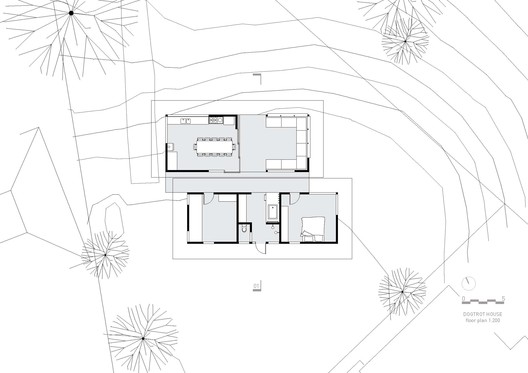
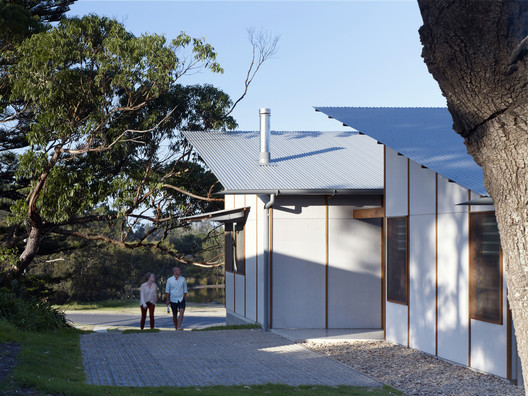
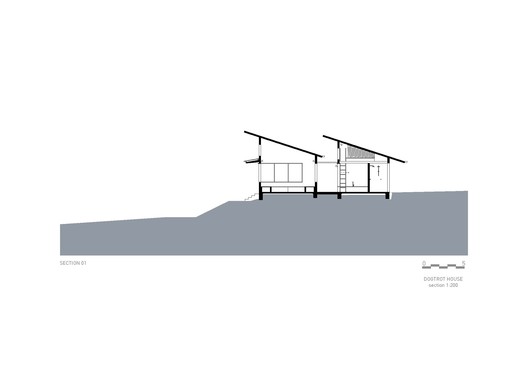
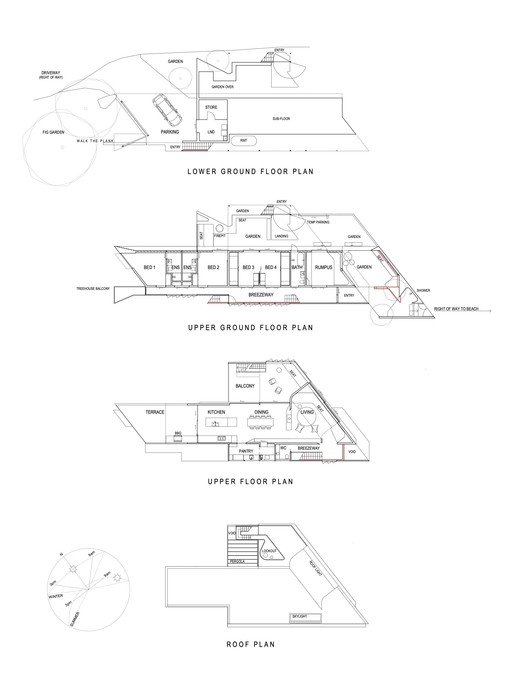
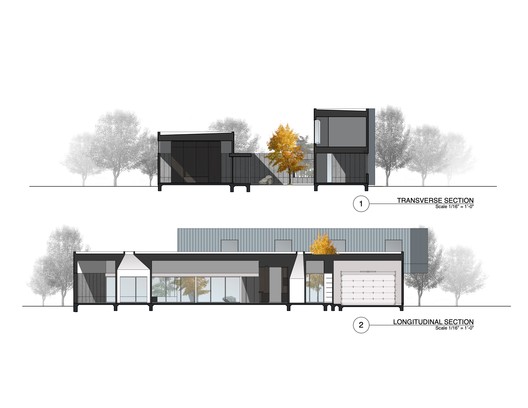
Dogtrot / breezeway house — the canonical "two volumes, open passage between, cross-ventilated" — is the closest historical analog to our main + companion idea. Two pavilions linked by a deck or glass bridge is the most permissive version for "not obviously attached," and the best fit for our concrete-break requirement. The H-plan ties two wings with a central spine and makes two outdoor courts (one public, one private). The "barbell" reading — two masses, a thin connector — is precisely our big "epic" volume + smaller "tuck-away" volume. And the courtyard-between-two-volumes turns the gap into the project's main room — for a south-facing sloped pad, that becomes a passive-solar sun court.
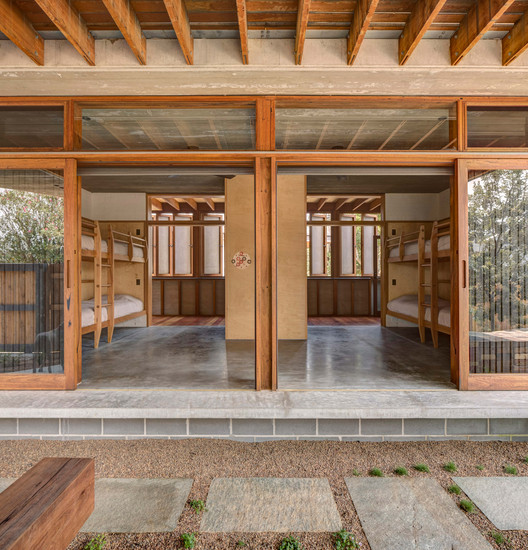
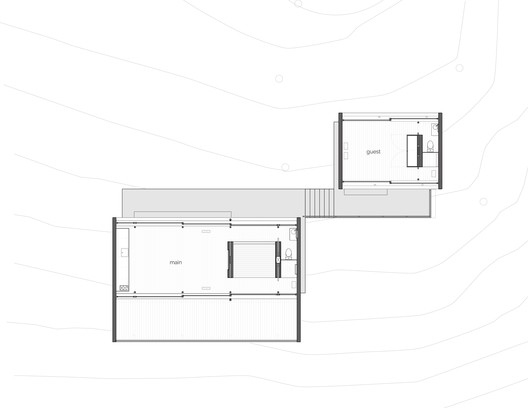
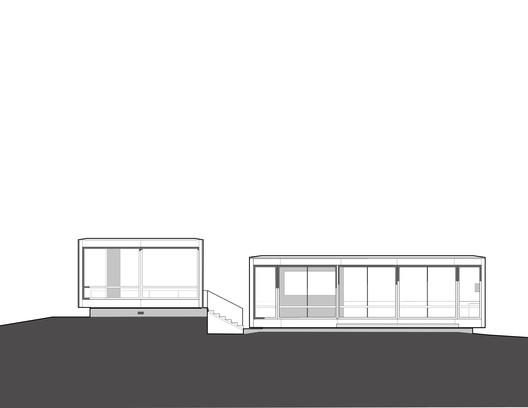
For our situation the winning hybrid is a "decoupled dogtrot" / two-pavilion barbell: two straw-bale boxes of unequal size, long axes roughly east–west for south glazing, separated by a real air gap, bridged by a deck that steps with the slope — with the structural/concrete break at the deck so the two roofs never touch. The Sonoma weeHouse (a main box + a smaller guest box ~15 ft apart, on concrete plinths in the oaks) is the precedent that already resolves exactly this, in our county.
What it might look like — the key moves
- The connector is a room, not a hallway. The deck between the two ADUs becomes the social heart — outdoor dining/lounge — opening south to the oak grove and the NW view.
- The separation stays legible. Two distinct, low roofs with a visible sky gap; the deck (with its concrete movement break) keeps each unit a separate ADU. Keep the connector visually subordinate — lower, lighter, open-sided.
- Orientation: long faces and full-height glass south to the deck-court and grove for passive solar (matches our sun study); solid straw-bale thermal-mass / service walls to the north and toward neighbors for privacy and insulation.
- Roof forms: mono-pitch or low-slope standing-seam metal on each volume reads cleanly as two; pitch them up toward the gap for clerestory light into the court, or down to shelter the deck.
- Main + companion massing (barbell): the big great-room/kitchen volume anchors one end; the smaller "tuck-away" unit is shorter/lower at the other. Vary roof slope, length, or height so the pair reads primary + companion — complementary, not mirrored.
- Privacy: offset/stagger the two boxes so glass doesn't face glass across the gap; the deck-court faces out to the view while solid backs face each other's private zones.
- The gap: ~10–20 ft between volumes — far enough to feel like two buildings, close enough to share one deck (the weeHouse uses ~15 ft; it also satisfies the ≥10 ft separation we flagged for the county).
One thing to flag for the design
A true dogtrot uses one continuous roof over both volumes — the opposite of what the county's "two independent ADUs" reading wants. So we borrow the dogtrot's plan + breezeway logic but adopt the two-pavilion roof strategy: two separate roofs, a visible sky gap, and the concrete break at the deck. That keeps us cleanly in "two detached ADUs" territory rather than a duplex.
Precedents
- Sonoma weeHouse — Alchemy Architects. Two unequal volumes (main + guest) on concrete plinths in the oaks, joined by deck/stair; our local, closest match. Our page · ArchDaily
- The Dogtrot House — Dunn & Hillam Architects. Two volumes flanking a covered breezeway; the canonical modern dogtrot. ArchDaily
- Breezeway House — David Boyle Architect. Two volumes joined by an open breezeway/deck, gardens between. ArchDaily
- House in Two Parts — assemblageSTUDIO. Two independent homes linked by an elevated breezeway — each works alone or together. ArchDaily
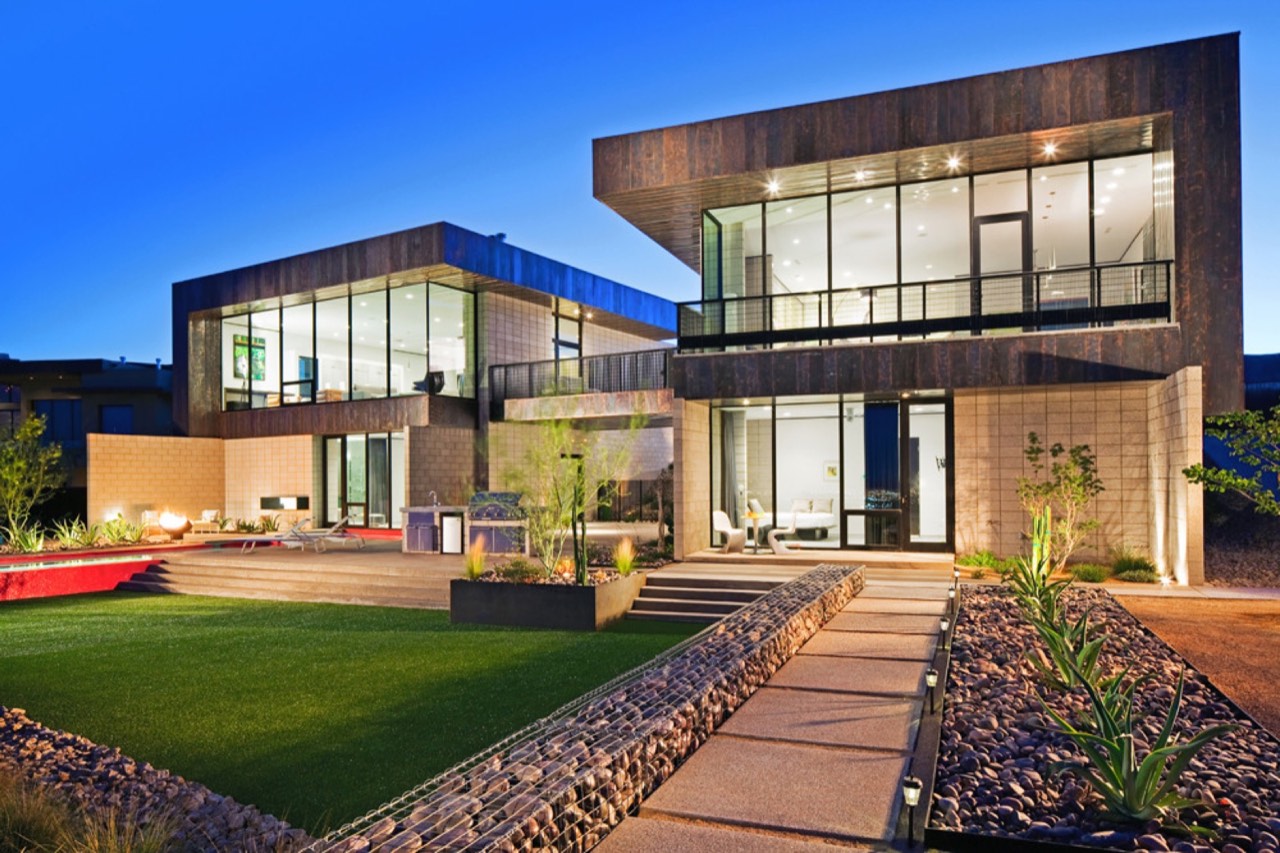
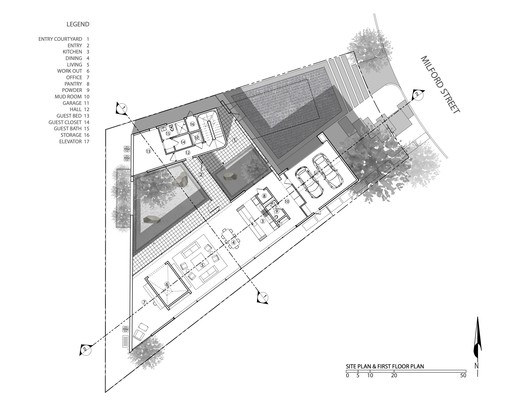
- 2 Courtyard House — Robertson Design. Two rectangular volumes joined by a glazed link, offset to manage privacy. ArchDaily
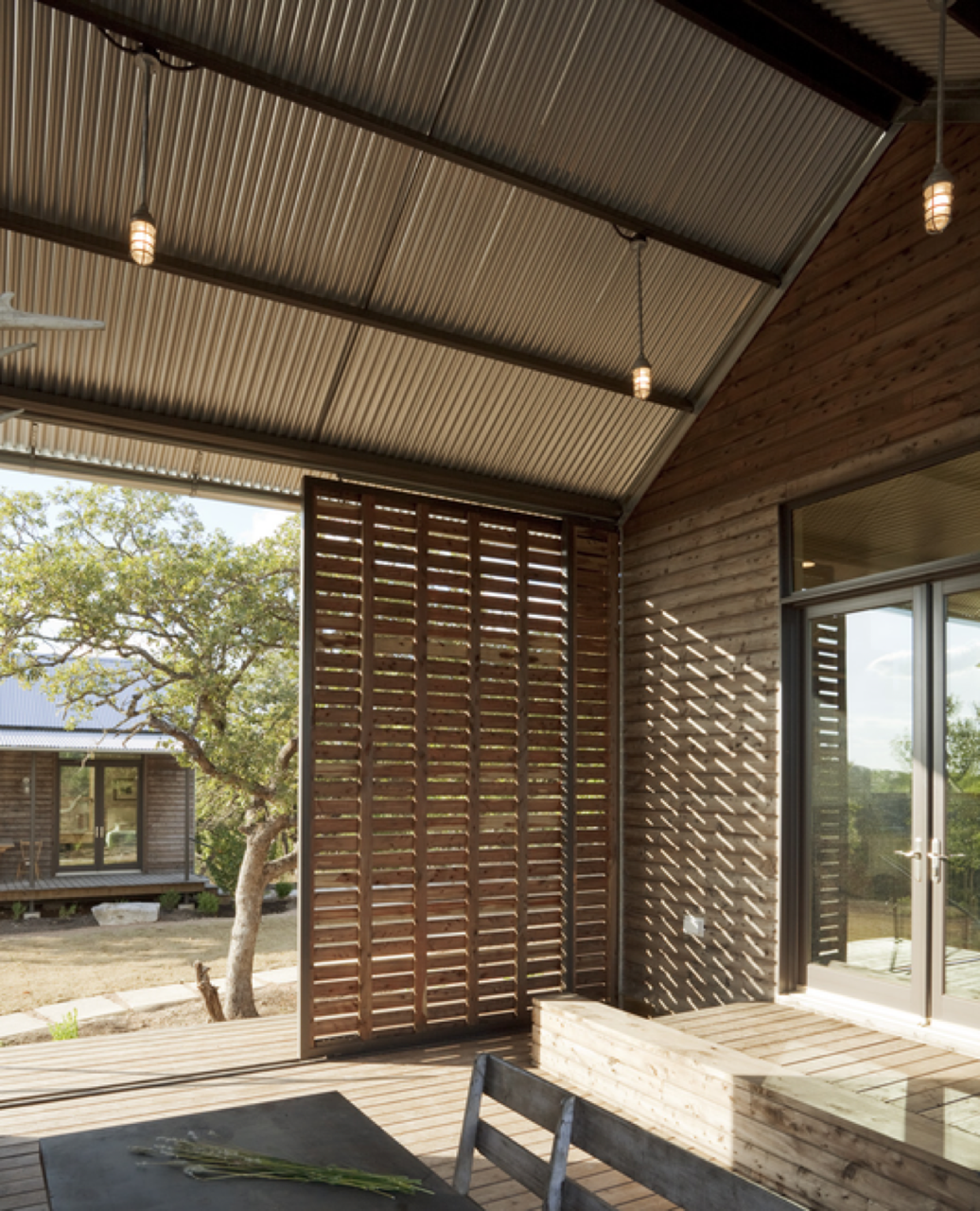
- Miller Porch House — Lake|Flato. Modular rooms joined by porches/decks as climate-tuned "connecting tissue." Lake|Flato
Conceptual drawings & photos © their respective architects, linked above. Assembled as a private design reference for the two-ADU compound.